
Shocked by Your Cloud Bill? A Guide to Cloud Cost Management and Optimization Strategies
Blog / Shocked by Your Cloud Bill? A Guide to Cloud Cost Management and Optimization Strategies
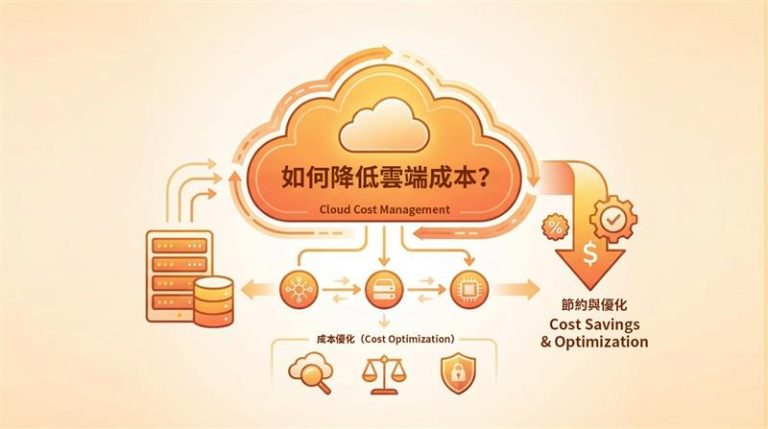
As technology continues to evolve, more enterprises are moving their services to the cloud in pursuit of greater speed and flexibility. While cloud services are powerful and highly scalable, costs can quickly exceed expectations without proper monitoring.
Managing cloud costs does not mean sacrificing performance. This article explores how to effectively control cloud spending and introduces six key optimization strategies to improve resource allocation, ensuring your budget is used efficiently and your cloud environment becomes a true driver of business growth.
Why Is Cloud Cost Optimization Important?
As enterprises accelerate their shift to cloud-based operations, the importance of cost control has grown significantly. A well-structured management approach not only ensures service stability but also helps balance flexibility with cost efficiency while minimizing waste.
Key benefits of cloud cost optimization include:
- Reduced financial expenditure: Cloud resources can be provisioned instantly, but unused resources may continue generating costs if not properly managed. Effective monitoring helps identify and eliminate unnecessary services.
- Optimized resource allocation: Continuous tracking ensures that computing and storage resources align with actual demand, avoiding overprovisioning and wasted spend.
- Driving business innovation: More efficient budget allocation allows enterprises to invest in emerging technologies such as AI and automation. Cost optimization frees up resources, shortens time to market, and accelerates digital transformation.
- Supporting sustainable operations: Optimizing cloud usage reduces energy consumption and hardware demand, enabling enterprises to improve efficiency while meeting ESG (Environmental, Social, and Governance) goals.
Breaking Down the 7 Core Components of Cloud Costs
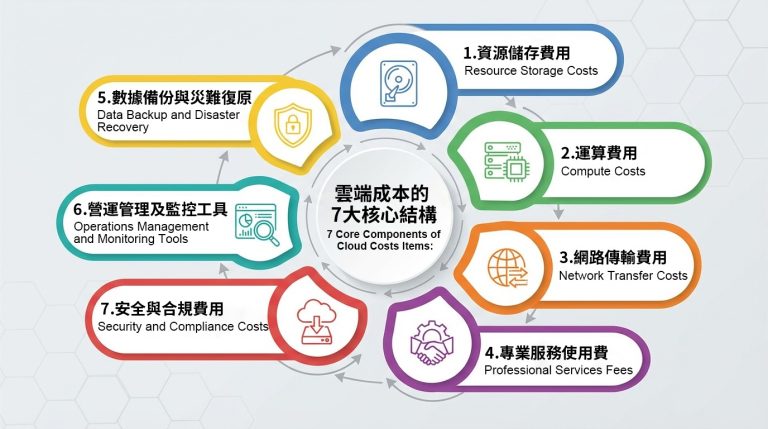
Cloud costs refer to all expenses incurred while using cloud services, including storage, computing, data transfer, and specialized services. Understanding these components is essential for effective cost planning and optimization:
1. Storage Costs
Whether storing daily documents, high-resolution images, or large database backups, storage is one of the most fundamental and long-term cloud expenses.
Costs are typically calculated based on data volume (GB or TB), and this is often where hidden costs accumulate over time.
2. Compute Costs
Compute costs cover the use of cloud processing resources, such as virtual machines, servers, and containers.
This category often represents the largest portion of cloud spending and is closely tied to workload intensity and runtime requirements.
3. Data Transfer Costs
Data transfer fees are incurred when data moves between the cloud and on-premises systems or across different regions.
For organizations handling large-scale data processing, inbound and outbound data traffic can significantly increase overall cloud costs.
4. Managed and Professional Services
In addition to core infrastructure, advanced services such as database management, machine learning models, and AI tools may introduce higher costs.
Regularly reviewing these services is essential for ongoing cost optimization.
5. Backup and Disaster Recovery
To ensure business continuity, enterprises often maintain multiple backup versions or store data redundantly across regions.
While necessary, the number of backup copies and retention duration directly impact overall costs.
6. Monitoring and Management Tools
Cloud-native monitoring tools, such as AWS CloudWatch and Azure Monitor, may incur additional charges.
However, they provide real-time insights into resource usage and play a critical role in optimizing cloud cost allocation.
7. Security and Compliance Costs
Security measures such as encryption, firewalls, and identity management are essential for protecting sensitive data.
Although these add to overall costs, they help mitigate the significant risks associated with data breaches and compliance failures.
Common Cloud Pricing Models
After understanding the structure of cloud costs, the next step is to learn how cloud services are priced.
Even for the same computing or storage requirements, different pricing models can lead to significantly different total costs. By understanding these pricing mechanisms, enterprises can align their strategies with business needs and achieve more precise cost management from the outset.
The following are four common pricing models:
| Pricing Model | Features | Suitable Scenarios |
|---|---|---|
| Pay-as-you-go | On-demand usage, pay only for what you use | Ideal for variable workloads, short-term projects, or product testing |
| Reserved / Subscription | Long-term commitment (typically 1 to 3 years) in exchange for lower pricing | Suitable for core systems or databases that run 24/7 |
| Storage Tiering | Pricing based on data access frequency. Frequently accessed data costs more but offers faster access, while infrequently accessed data is cheaper but slower to retrieve | Suitable for archival data, old reports, or infrequently accessed files |
| Hybrid Model | Combines multiple pricing models for flexibility and cost optimization | Ideal for e-commerce promotions or businesses with seasonal traffic spikes |
Six Key Strategies for Cloud Cost Management
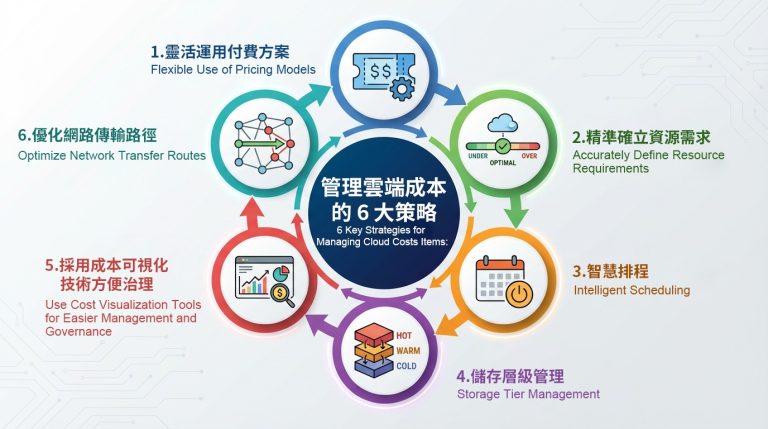
After understanding pricing models, enterprises can implement the following six strategies to maximize the value of every dollar spent:
1. Choose the Right Pricing Model
Selecting the most suitable pricing model based on actual usage patterns is the first step in optimizing cloud costs.
For stable workloads that run continuously, switching to reserved or subscription plans can significantly reduce long-term expenses.
2. Accurately Define Resource Requirements
Many enterprises overprovision resources to avoid performance issues, leading to unnecessary costs.
Regularly analyze performance metrics. If CPU or memory usage consistently remains below 50 percent, consider downsizing resources to better align capacity with actual demand.
Related reading: Infrastructure for Software Services: Understanding Cloud Service Models and Cloud Computing Deployment Models
3. Implement Smart Scheduling
By adopting automation, enterprises can dynamically scale computing resources based on demand.
For non-production environments such as development or testing, automated start and stop schedules can eliminate unnecessary costs from idle resources, helping balance performance and budget.
4. Optimize Storage Tiering
Not all data needs to be stored at the highest performance level.
Classify data based on access frequency by keeping frequently used data in high-performance storage while moving rarely accessed data to lower-cost archival tiers. This approach reduces long-term storage costs without compromising data security.
5. Improve Cost Visibility and Governance
Unseen costs are the hardest to manage. Turning cloud spending into transparent, trackable data is essential.
By implementing resource tagging and cost allocation mechanisms, enterprises can use centralized dashboards to monitor spending. Engaging professional cloud management providers can further ensure that investments are aligned with actual business value.
6. Optimize Data Transfer Paths
Data transfer between cloud systems and users is often an overlooked cost driver, especially for cross-region traffic.
Enterprises should deploy servers and databases within the same region whenever possible and adopt Content Delivery Network (CDN) caching to reduce repeated data transfers. This not only lowers bandwidth costs but also improves user experience through faster connectivity.
Simplify Cloud Cost Management with OneAsia
The value of cloud technology should lie in driving business growth, not becoming a financial burden.
Even with these six optimization strategies, enterprises may still face challenges such as complex multi-platform billing, resource tagging management, and storage optimization decisions, all of which require significant expertise and effort.
For a more streamlined approach, OneAsia offers end-to-end cloud managed services and tailored solutions to support your infrastructure. Our team ensures optimal system performance, security, and availability while helping you manage costs effectively.
Contact us today to build a more competitive edge in your digital transformation journey.
References:
- HK01 – 數碼轉型:善用現代化程式建設雲端,3大方向改善營運,減低成本
- Oracle – Cloud Cost Management
- Google Cloud – 什麼是災難恢復